


Blog / How To

Blog

All How To New Cars Community Reviews Events Service News Used Cars Safety #LoveAugusta Milton Ruben Auto Group News Parts Augusta Community Accessories Construction Tech Opinion Instructional Videos Employees Vehicle Warranties Nostalgia Augusta Group Dealer Augusta Group Service Finance Scion Augusta Used Cars ToyotaThon Travel Tips Bloopers
swagger-wagon-10

How to Prepare Your Car for the Road Trip Ahead

It's that time of the year! Can you smell it? Time for gas prices to escalate, drivers to get aggressive and impatient, roads to get hazardous, and the kids to get impossibly rowdy! The holiday season is upon us! Now before you jump on the bah hum bug bandwagon too quickly, you should know there are a lot of ways you can prepare for the impending road trip to grandmother's house and avoid events that are going to raise your blood pressure higher than mistletoe.  To prevent any mishaps that could extend your trip or cause delays, we've put together a list of ways you can prepare your vehicle for the road trip ahead. Keep It Clean Get a complete detail done on you vehicle - particularly the interior.  Nobody likes to be in a vehicle for long periods of time to begin with, much less one with funky smells, mystery stains, and the Krystal wrapper from lunch one day last week.  And once the car is clean, keep it that way.  You can refashion a plastic re-usable cereal container with a small trash bag for a portable (and close-able) trash can.  You can also stuff old grocery bags into an empty kleenex box to fill with fast food wrappers and toss each time you stop for fuel up.  Both are a convenient size to stick on a floor board, in a console, or under a seat. Check Your Tires This may be one of the most important safety tips you'll ever get.  Particularly if you're traveling North, where snow and ice may challenge your tread, it is vital for your tires to be in good shape.  Use a Tire Pressure Monitor or Gauge to check the air in your tires.  You can fill up your tires for a dollar at most gas stations, or ask your service advisor about Nitrogen.  (Nitrogen filled tires keep pressure longer, helping you maintain optimal gas mileage and overall health of the tire.)  You can use the coin test to check tread.  If they're low, you're going to need to get them replaced before the trip.  Bad tread and low tire pressure can not only affect the efficiency of fuel, but it can also decrease stopping speed of your vehicle and endanger your family.  Don't forget to check the spare! Inspect Engine/ Top Off Fluids Pop the hood and carefully inspect all of the wires and hoses on the engine of your vehicle.  If any are frayed or damaged, you may want to get them replaced before head out.  And while you're under there, check your fluids: brake, transmission, coollant, windshield wiper, etc.  Top off any that are low, and consider whether or not your windshield will need wiper fluid that is made for lower temperatures. Depending on how far you plan on driving, it may be reasonable to go ahead and get your oil changed and a new oil filter installed. Check Your Lights Get a friend, spouse, neighbor, stranger, or kid to help you check your headlights and brake lights to ensure they are bright and clear on each side.  If you can't get help, carefully park near a wall at night and check the reflections on the wall.  You can keep your lights bright by cleaning off the lamps with toothpaste! Of course, all of the above tips can be done here at Milton Ruben Superstore by your Certified Technicians.  In fact, let your Service Advisor know that you're traveling, and they'll make sure your vehicle gets a thorough inspection to ensure the safety and comfort of your family on the road. Make your appointment here! Make sure you check for any specials or deals! Map It Out Preplan your route with your GPS, Navigation System, or map.  If you're as obsessed with the Food Network as I am, you can plan out pit stops for food through TVFoodMaps.com, which will show you restaurants and diners featured on the Food Network along your desired route.  There are also plenty of websites such as FuelMyRoute.com that help you identify the most affordable fuel options.  Make a list of destination addresses and keep them handy for reference.  Many navigation systems will now allow you to plan your route with "via points," so you can let technology do the work for you once you hit "go!" Traffic Happens Program local traffic stations of cities you'll be driving through so you can be aware of any possible delays before you get there.  Of course, if you're not willing to compromise your presets on satellite radio, many modern navigation systems will forewarn you and even offer alternate routes in the case of construction or other delays! Don't Text And Drive Of course, it's tempting to read the incoming stream of plans from your family members as they ask you to report every leg of your trip on the half hour.  We know.  But it's not worth the danger you put yourself, your family, and others on the road to take your eyes away from the prize and get distracted.  Luckily, modern technology in most of our Application Suite Centers will allow you to connect your phone to bluetooth and have your vehicle read the text messages to you!  Thank goodness for manufacturers who understand reality!     There you have it!  Be sure to check out our post on traveling safely with your pets, and stay tuned for more posts on preparing for holiday road trips by following us on Facebook and Twitter! This post was written by Milton Ruben Media Specialist Heather Cortright.

recallsgraphic

What To Do With Your Recall (And What to Expect When You Get Here)

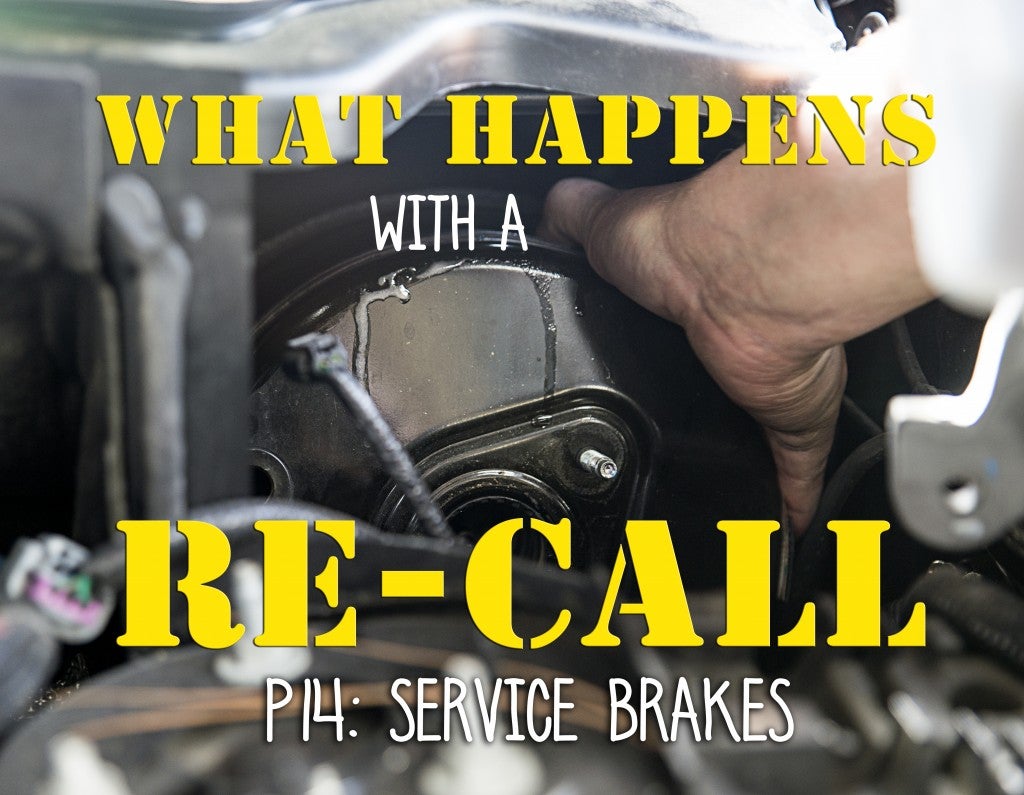
Recalls are confusing stuff.  What do you have to do? What does it mean? What part could do what to where? That letter that arrives from the manufacturer is long, wordy, and who has time to google every other word to figure out what its trying to say? Like we said, figuring out what to do with a recall can seem like complicated stuff.  We understand how frustrating the process can be when you aren't sure what to expect or you're worried your vehicle might not be safe if you don't helo-vac your it to our Service Lane for repairs ASAP.  And we want to settle your mind.  So we started a Recall Video Series, so you'll know what to do with your recall, what to expect when you bring your recall to the service lane, and whether or not you should be worried. CHRYSLER, INC. RECALL P14: BRAKE BOOSTER ASSEMBLY If you have any further questions, please don't hesitate to call your Service Advisor!   And stay tuned for more updates on our Recall Video Series on Facebook, Twitter, Instagram, and Google!

4702744_G

Win Guitar Pull Tickets Here!

It's one of the biggest music events in the Augusta, GA area.  For some, it's the ONLY music event of the year, with citizens camping out all week to buy tickets on sale for a single day, community business coming together to form alliances and give away seats, and the local country music station keeping their headliners close to their chest before announcing special guests. The Augusta, GA Guitar Pull. This year, the James Brown Arena stage will be packed with a multitude of the biggest country musicians in the industry, including Joe Nichols, Thompson Square, Dustin Lynch, Kip Moore, Dan + Shay, and Hunter Hayes - so it's no surprise that the tickets disappeared so quickly. And to be honest, it was tempting to keep the tickets we have to ourselves. But we won't. That's right, good folks of Augusta, GA - we have Guitar Pull tickets.  And we're giving them away! Take a test drive and be entered to win two Guitar Pull Tickets! Good until the concert in Nov 2014. Come in and test drive a vehicle in any of our stores and you'll be entered to win TWO tickets to the country music extravaganza of the year! Make an appointment with a member of our highly trained internet sales team by clicking in to www.drivebaby.com, or just come see us - we're on Washington Road in Augusta, GA! See you soon!   PS: If those big names weren't enough to reel you in, did you know that Augusta, GA's Guitar Pull is the biggest single local donation to the Million Pennies for Kids campaign every year?  The Million Pennies for Kids Campaign raises awareness and donations for St. Jude's Children Hospital and other youth-related charities!  A great night for a good cause! To stay updated on more contests, follow us on Facebook, Twitter, Google, and Instagram! Post by Milton Ruben Media Specialist Heather Cortright.

CDJR_tiresale

Save Money with our Deals and Coupons!

We've been conducting a few polls here and there to find out what you want to see from us in your newsfeed.  The most popular answers were "Information on vehicles," "Advice on how to better care for my car," and " Coupons and Specials." Well we've been hard at work for the last few weeks stocking up on walk-around videos to answer your questions about the new cars we keep in stock, helping you make a decision about what car is best for you.  We also continued our Service Video series conducted by our Service Managers and Service Advisors to help you take better care of your vehicle, helping it hold value longer, and keeping you safer.  Now to tackle the last request! Here's a couple specials we have running in our Service Lanes and Parts Departments right now: And in the future, you can stay up-to-date on other ways we're trying to save you money by checking the " Specials " tab at www.drivebaby.com! Also, we'll start posting more of these specials on our social media networks to keep you in-the-know on when the best time is to buy or have service done on your vehicle. Keep giving us more suggestions! We are striving to have the best customer service in the CSRA!  You can find us on Facebook, Twitter, Google, Instagram, and LinkedIn! This post was written by Milton Ruben Media Specialist Heather Cortright.
#WhatsInTheBay - What do you want to see?

When I was in college, I drove that stereotypical " first car."  It was a hand-me-down from my sister, who had gotten it after my dad upgraded to a new model.  The headliner was torn so badly it was wrapped in a re-fashioned fabric book sock so the foam wouldn't rain down into the eyes of the driver at random.  The A/C only worked between 35 and 60 mph, and even then it was 78 degrees or bust.  The radio dial took up residence in a cup holder since no variety of glue could hold it in place anymore.  It took fourteen years of faithful service to my family before it finally died on me in my junior year of college. In the middle of the night.  While I was driving it.  Through the backwoods of West Columbia, SC.  Twenty years old, female, unaccompanied and clueless about cars at the time, I found myself being told by a private shop technician that it would cost nearly a grand to fix my car.  I learned 48 hours later in the parking lot of Walmart trying to coax "Big Red" to start that I had been swindled quite badly.  It was that moment that it dawned on me - I needed to learn more about cars.  Particularly their regular maintenance and mechanics.  After all, $1000 was a lot of Easy Mac. Here at Milton Ruben, our service departments do their best to keep our customers updated and informed, answering any questions you may have about repairs to avoid the above situation from happening.  But it has occurred to us that some questions could be easily answered at any hour of the day with a nice, informative video.  And you guys have always been the best source for what we should focus on - so we turn to you to learn what you want to know about basic maintenance and mechanics of your car. Who knows - if it's a good suggestion on how we can teach you to keep up the upkeep of your vehicle, we might even throw out a gift or two. So, tell us, what question do you have about vehicle maintenance that we could focus on in our upcoming videos? Feel free to comment, private message, or e-mail socialmedia@miltonruben.com with your feedback! Check up on if we've answered your question by following us on Facebook, Twitter, Instagram, Google, and Pinterest! This post and graphics were created by Milton Ruben Social Media Specialist Heather Cortright.

Feet First: The Basics of Buying Tires (Speed Rating)

October 24, 2012 - The day that speed demons everywhere cried with joy.  The day that Chrysler Inc. decided to pursue the concept of the powerful Hellcat (that may not be true). The day that Texas announced their 85-mph speed limit on Hwy 130. Possibly the day that hundreds of car-enthusiasts decided to upgrade their tires. "Tires?? Why would they buy new tires??", you ask. Good question.  The answer? The tire's speed rating. On the far right, in pink and purple, is the tire's "service description," consisting of load rate, and speed rating. Speed rating is what kind of miles per hour a tire is capable of withstanding.  Think of it in the sense of the term, "burning rubber."  When a tire meets the road, it does so continuously, over and over again as it carries your vehicle across a stretch of distance.  This creates friction, thus heat.  The faster you go, the more the tire meets the road, the more friction, the more heat. Alas, the term "burning rubber." Found in the alphanumeric "service description" next to a tire's size on the sidewall, speed rating is assessed from a lab test by the manufacturer where the tire is applied to a large metal drum at the pressure that equates to the load rating.  The tire is spun against the drum at increasing speeds in ten minute intervals until the necessary speed limit is met.  That number is represented by a letter. It should be noted that these gradings assume the tire has not been damaged, is within tread life, is properly inflated, and that routine maintenance (ie: rotation) has been kept up. Now before you start hyperventilating that you need a "Z"-rated tire on your minivan, keep in mind that most cars have a "top" speed they can reach before they max out.  It would be kind of worthless to equip your Sienna with Z(Y) tires when the fastest it can reach is 120 mph.  (Which makes it the perfect vehicle for your driver-in-training teenager, right?)  Save your money for that freedom cruise when the kid finally turns 18 - for you, not them.  Conversely, it's not a good idea to put a lower-rated tire on a higher-rated vehicle.  This is why it's suggested you only ride on the spare tire for a day or two at lower speeds - it really can't handle much more than that. Of course, if you are, hypothetically, one of these mythical speed demons (because no one ever really tests out the reaches of their muscle engine, surely), then some crazies in the tire industry brought us the "Z-series."  As you can see in the infographic, Z-rated tires are then expanded into three levels.  These tires have the best grip and stopping power, but when (hypothetically) used to their purpose, have a very weak tread life.  Yes, these are the tires the Nascar drivers have to change every twelve left turns - because they've quite literally burned off the tread. (Whoa.) Ever seen those shredded tires on the interstate left in the wake of an 18-wheeler? That's the fate of a tire not properly rated to the weight and speed of it's automobile.  For a semi, it has a multitude of back-ups.  For you, the results could be fatal.  A safe rule of thumb is to stay with the speed rating chosen by your vehicle's manufacturer, or, as always, consult an expert. There you have it.  The last of our four primary components that define the perfect tire for your ride.  We've smoothed out the points of ride quality, lengthened the life of your tire, bundled you up for inclement weather tires, and, finally, given you a quick recap of speed rating.  Hopefully these basics will help you in your next tire-search.  Of course, these are still only a small slice of the pie that is complicated tire formulas, but maybe now the words our tire experts are saying will make a little more sense - saving you time in your next visit. To stay in loop on our "How To" and tutorial blogs, follow us on Facebook and Twitter! This post, including graphics, was created by Milton Ruben Social Media Specialist, Heather Cortright.

Feet First: The Basics of Buying Tires (Weather Conditions)

Late evening, in the mountains of no where, North Carolina - My sister and father were driving home from a day of snow ski racing.  Seeing as it had been sleeting and snowing all day long (a rarity even in those parts), everyone and their grandmother were holed up with their white bread and whole milk.  No one had the insanity to venture out on the slick, frozen roads.  No one but my dad, anyway. As they coasted down a hill toward an intersection, the light flipped a haunting green, and my dad flipped on a haunting light bulb.  My sister had just started studying for her driver's test, and Dad thought "What better way to teach about the dangers of inclement weather driving...?"  He spun the wheel, popped the brakes, and their four door four wheel drive sedan fishtailed through the intersection like a Disney on Ice.  My sister completely  missed the "Don't tell your mother about this," while she tried to reign in her attack of terror, but she didn't start to grasp the severity of driving in ice. There are a lot of tips and tricks on how to master winter conditions.  Almost half of them are probably true - but this one we can vouch for - buying the right tires. Since the early 1900's, engineers and other braniacs have spent a lot of time designing tires to fit every last possible need of the driver.  Certain tires built to withstand certain seasons may have been the most important. There are four main types of tires, each with a variety of subsections.  But we're focusing on the basics here, so let's get to it. 1. Winter Tires: We don't tend to have too much need for these down here.  Built to maintain traction in light snow and ice, these tires are specifically built with a certain rubber compound to remain soft in freezing temperatures so they can grip in the winter elements generally so rare to us here in Augusta, GA.  It's not recommended for us here because of how poorly they perform in rain. 2. All-Weather Tires: After this year, these tires might become a little more marketable across the SouthEast.  These tires are built to reflect their name - withstand all four seasons and whatever nature throws at them. The rubber compound remains soft and effective in both freezing and warm temperatures. These tires tend to have a slightly aggressive tread on one side for light snow and ice, but still have the channels to repel water on rainy days. The tread can also help in  maintain traction on wet leaves in the fall. An easy tell on the difference between All-Weather Tires and All-Season tires is the Mud and Snow capability.  Slightly elevated grip and traction make these tires good for almost anything. 3. All-Season Tires: The most common type of tire found in the Southeast, all-season tires are built with multiple channels to repel water and maintain grip through rain puddles (not flooding).  The rubber compounds can remain soft in warm temperatures, but will harden below freezing, compromising traction (ie: turning and braking is riskier).  The sidewalls on All-Season tires are built stronger and thicker - making them ideal for smooth ride quality.  Because they are such a popular tire, the tread is constructed for longevity. 4. Summer and Performance Tires:  These tires are built to withstand the fires of Dante's Inferno (I'm exaggerating a little - please don't try to set your tires on fire).  We'll revisit the construction of Performance tires when we talk about Speed Rating, but the basis is that these tires are built for high speeds, high friction, and thus, high temperatures.  Thinner and shorter sidewall enhance grip and handling for quick turns, but this also keeps the tire from being able to absorb impact of road imperfections - throwing a bump or two in your ride quality.  Because these tires are meant for heat and intensity, they tend not to last as long as All-Season tires.  They equipped with some channels to control grip in water, but they most definitely cannot perform in snow. Nine times out of ten, an All-Season tire will meet the needs of the people in Augusta, GA.  Of course there are also tires built for off-roading, big trucks, etc.  But these are just the basics - feel free to enlist the help of our tire experts if you are interested in an all-terrain or light truck tire. Don't forget to make sure you're getting the appropriate size, that you're considering tread life, and that you'll be happy with the smoothness of your next road trip. Stay up to date on our Basics of Buying Tires blog series by liking us on Facebook, and following us on Twitter! This post and all graphics was created by Milton Ruben Social Media Specialist Heather Cortright.

Feet First: The Basics of Buying Tires (Tread Life)

"You get what you paid for."  College, weddings, dating someone new, buying new tires - there are some things in life that make your eyes glaze over with dollar signs and a thinning wallet.  Sticker shock frequently makes it difficult to wave off those dollar signs floating in your periphery and focus on the long-term benefit, particularly for the first three points on that list (because it usually doesn't exist). The last one, though, might warrant some explanation. If we dove straight into how the prices of tires are assessed, it would be a lot of mumbo-jumbo, calculations and figures and images of crazy-haired Einstein sticking his tongue out at you as though he knows its all going straight over your head.  What we can do, though, is focus on one of the 19-25 components tire manufacturers say make up a quality tire - and it happens to be the biggest defining factor in price. (See the introduction to Feet First: The Basics of Buying Tires for more components.) Tread Life is the longevity of the tire before it starts to crack or "bald." If you haven't been living under a rock, you've heard about the Lincoln's head trick - the one where you apologetically shove the top of a penny into the tread of your tire and if you can see the top of Lincoln's head, you need new tires.  You have heard of that right?  How about the George Washington trick? Or the Lincoln Memorial trick? No, this isn't a history of coins lesson, put away your notebook and get out your coin purse (or raid your kid's piggy bank). "The Penny Trick" works in more than one way: If you're testing for snow ready tires, you shouldn't be able to see the bottom of the Lincoln Memorial on the tail-side of the penny. Flip that penny over and look at the tail's side.  When the penny is turned upright, take a peek at the bottom of Lincoln's Memorial.  If your tread is just grazing it, your tread is at 6/32", which is a reasonably safe tire under most circumstances in the southeast.  But if you're planning on trekking to the Great White North anytime soon (or Jay Jeffries is calling for another Icemaggedon - we miss you, Jay!), it might be time to consider some new tires.  This is the bare minimum tread your tire can grip snow. (Read about the right tires for inclement weather in the next Feet First Post!) Use a quarter to test for wet-weather ready tires. Since it pretty much rains everywhere, this is also a good way of preparing for an impending tire purchase. Now it's time to whip out good ole Georgey.  Slap that quarter upside down into the tread and squint at Washington's crown.  If your tread is at the top of his head, it's brushing 4/32" - respectable, but not great.  Wet weather conditions become tricky at this much tread.  You have a little time left before it becomes downright dangerous, but not long. These tires are in (goat-like voice) baaaaaaaad shape. No, they won't grip anything. They basically make your brakes into "more of a guideline than actual rule." Time to break down and buy new tires! Then there's the one everyone knows: If you can see the top of Lincoln's head on a penny, that means your tires are at less than 2/32" - and they're downright dangerous.  The tread has worn so thin, it has virtually no traction in any variety of wet weather.  Your risk of hydroplaning and losing control of your vehicle go up exponentially.  It's time to go tire shopping. Well, if it's that time - how do you pick a tire that will last longer next go round? Uniform Tire Quality Grading (or UTQG) is the trusted resource for how quickly a tire's tread will bald. The grades are based on percentage to wear to bald compared to a control tire in experimentation.  So if it wears 50% faster than the control tire, it would have a 150 pt rating. These tests, however, are conducted in a lab, so other factors like weather, road conditions, and temperature could also contribute to tread life, and they should be considered when you're looking at tires with no mile warranty. You can find UTQG on the sidewall of any tire, broken down into how quickly the tread wears down, the quality of grip on the tread, and how well the tire can withstand extreme temperatures. Still, having a warranty isn't a completely care-free world. Tire manufacturer's warranties come with caveats.  For example, warranties don't carry from owner to owner, nor do they carry from vehicle to vehicle (this is why it's important to hold on to those pesty papers documenting tire's being installed on your automobile).  Warranties will also void if you didn't pencil in some regular maintenance ( checking tire pressure and ensuring proper inflation, regular rotation and alignment, replacing suspension if it wears, etc.) Yep, you're seeing dollar signs again, aren't you? Perhaps a little perspective will rest that panic. Although we keep inexpensive lines to fit any budget, most of the time, the tires that seem to be the easiest on your wallet come without a mileage warranty.  Those tires don't always last very long, making the mid-shelf and upper-shelf tires more of a long-term investment - not to mention safer.  (Cue E-Trade baby talking about easy investing!) Milton Ruben's parts departments carry a variety of tires to meet your needs and budget. We aren't discouraging you from purchasing those lower-end tires. (After all, they can be practical on an older vehicle that's just a temporary fix.)  We just want you to be prepared with the necessary pros and cons to make an informed decision. Of course, our parts departments are all trained on this information - they could save you some hassle and help you pick out the tires that will meet your needs - and your budget. As always, if you'd like to stay informed on future posts about tire buying, or anything else vehicle-related, Like us on Facebook, follow us on Twitter, or take a peek at our Instagram. This post, including graphics, was created by Milton Ruben Social Media Specialist Heather Cortright.

Feet First: The Basics of Buying Tires (Ride Quality)

Flipping through the ads that dominate the Sunday paper last weekend was a myriad of brightly colored keds, flip flops, and heels for back to school shoe sales (since when do kids wear heels to school??).  The fashionistas of late don't seem to put much thought into things like arch support or tread traction for the longevity of your kid's knees. But we do. Well, for your car baby anyway.  If you've been considering a purchase of new tires for your vehicle, there are a number of elements to consider.  Tire manufacturers say there are 19-25 varying components that measure in to what frequently seems to simply be circles of rubber.  When it really comes down to it, according to our tire experts, there are four key components you really need to consider: ride quality, tread life, weather conditions, and speed rating.  We address the basics of sizes and a brief overview of those four key components in a past blog, Feet First: The Basics of Buying Tires.  But now we would like to dive a little deeper into ride quality and discuss how you can decrease the richter scale you may be experiencing on your commute. 1. Ride Quality is how minimized the road irregularities are to the vehicle's passengers. “Ride Quality is usually the number one concern for our customers,” says Lisa Randall, one of our Toyota Parts tire experts. Owners of family vehicles tend to prefer a smoother ride to not jostle the little ones, so they would require a larger, thicker tire to absorb any bumps in the road.  Those who drive performance vehicles, however, may like a tire with a lower profile.  The latter have thicker sidewalls and improved handling, but are more susceptible to taking the hit each time they roll over road damage.  Unfortunately, this component relates to that old children's song: "The toe bone is connected to the foot bone," ankle bone, leg bone, etc.  If the comfort of the ride feels like an old wooden roller coaster with questionable safety inspection certifications, the under belly of your beloved carriage might be taking a beating.  Each vehicle has tire size suggestions based on the needs of the alignment and suspension of the car.  Wandering outside of that suggestion could result in harm to your car - and could void your warranty. A small sedan wouldn't need low-profile performance tires or high-series off-road tires. With 55 series rating, this tire is more mid-series than high or low. In this infographic of size markings on the sidewall of a tire, you can see where I've marked the ratio between sidewall thickness (or height) and width in green.  It's a percentage of the relationship (ie: the sidewall height is 55 percent of the tire's width), and is called the tire's "series" or "profile." A sporty tire with shorter sidewalls would be considered a lower-series tire. Off-road tires tend to be higher-series tires, designed to absorb the impact of a rough road or track. (Read about how different tires perform in inclement weather here.) If you're hoping to get the best ride quality possible, there are other parts of the car that can help. Read about those relationships here. Since a lot of these factors are difficult to measure, consulting an expert is really the best bet here. To stay updated as more portions of our Feet First series is published, Like us on Facebook and Follow us on Twitter! This post was written by Milton Ruben Social Media Specialist Heather Cortright.

The Basics of Buying Tires: Feet First (Intro)

Have you ever had those terrible aches and pains in your knees and back that seem to have no cause whatsoever? (Stop it, you are not getting old!) Then you go to the doctor and he tells you to take better care of your feet.  What? My feet? Congrats! We just found yet another way that your car directly reflects you - its "feet" impacts an enormous amount of its performance.  Tires are the root of safety in your vehicle, the hidden crutch for your failing fuel economy, the terror behind your testy alignment.  Any automotive technician will tell you - having tires that fit your car, life, and environment is vital to keep your vehicle healthy and you safe. This is the part where I remind you of that documentary that popped up after Top Gear - that one with diagrams floating across the screen and some deep, throaty James Earl Jones wannabe saying words that sounded like English but had far too many syllables.  The components that go into the quality of tires are extensive, confusing, and far more complicated than we'd like.  This is why we hired professionals in our parts departments to help you.  And right now, we're going to lay out the basics so it's not all mumbo-jumbo the next time you purchase new "shoes" for your ride. Every brand likes to decorate their handiwork - and tires are no different.  On the side of your tires, manufacturers stamp their brand, the model of tire, and the specs of the tire in an alphanumerical code.  Here's the breakdown of that code: Here's an example of reading a portion of the metric sizing on your sidewall. This tire is fitted on a large truck. Another example of metic sizing code on the sidewall of a tire. This one also includes the Load Rate and Speed Rating. It's fitted on a luxury sedan.   Each portion of the code points to a different component of the tire that defines its size, performance, rating, etc. Tire manufacturers say there are 19-25 varying components that measure in to what frequently seems to simply be circles of rubber.  According to our tire experts, there are four components that really top the charts when you're considering purchase: ride quality, tread life, weather conditions, and speed rating. 1. Ride Quality is how much of the bumps and divets of the road gets absorbed into the tires, providing you with a smoother ride. (Read more about Ride Quality.) 2. Tread Life is the longevity of the tire before it starts to crack or "bald." See more about tread life gradings here. (Learn how to tell what your tires are ready for.) 3. Weather conditions define what kind of environment tires have to survive and perform in. 4. Speed Rating defines the amount of heat or friction a tire can endure. See a chart explaining speed rating here. Each of these factors impact the life, safety, and performance of how a tire interacts with your car, and breaking down the formula isn't always easy.  This is why we are breaking it down for you in a series of posts - stay tuned for more of Feet First: The Basics of Buying Tires! Of course, if you're not a math person, our Parts experts are always happy to crunch the numbers!

Protect Your Pooch: Car Pet Safety

It takes twenty minutes for you to realize anything else exists when you get home from work every evening because you are too busy being worshipped by that whole body wiggling and spinning in awkward momentum with it’s tail - also known as the tornado.  PetsMart cashiers know you by name when they ask how little Roscoe liked that Hide-A-Treat ball you picked up for him on his birthday last month, and they laugh knowingly as you explain the adorable demon destroyed that “indestructible” toy like it was a cotton swab.  That little fuzz ball just might be the love of your life (sorry, honey).  So these canine-friendly car safety concerns spamming your news feed lately might be making you lose a little sleep (amidst those soft puppy snores coming from the corner of the bed - again, sorry, honey). Admittedly, one of the reasons I chose to write this blog was so I could find a ton of adorable puppies in cars. Allow us to help!  Pick up several canine-friendly safety tips for the road from our own list:   1.  No Shot Gun for Shotsie! - Vehicle airbag safety systems were created to keep humans safe, not dogs.  When they deploy, it could be at speeds high enough to literally end your pooch.  It’s hard to make road trips without him happily hanging his head out the window and lapping up the passing air, but it’s for the best that they be enjoying the view in the back seat. Pet seat belts are available to secure your pet in the back seat, where they are safe from the force deploying air bags in the case of an accident. 2.  Secure Sable - Familiar with the chaotic traffic of Atlanta? All of that speed-up, quickly slow-down, swerve to avoid that lovely gentleman that just cut you off from three lanes over?  That kind of motion can do some severe damage to anything that isn’t tied down - especially a small body that isn’t sure whether they should sit, stand, or run around the car in circles barking at every passing pick-up.  Investing in a pet carrier, pet seat belt, or car barrier is worth the life of your lab, and will help prevent you from being distracted. (Check out how to use a harness with a seat belt.) Pet car barriers can help keep your pets safe from getting tossed around in the car. 3.  Distract Doby - Everyone is a safer driver when their patience hasn’t been thinned by a very vocal dog warning other cars in traffic that these four wheels are his territory. Bringing long-lasting chew toys are a great way to calm down your canine and distract them from passing prey.  A lot of experts specifically recommend a hollowed-rubber toy stuffed with cheese, peanut butter, or other treats your pet enjoys.  Put that persistence to work elsewhere! This method of securing your puppy doesn't look according to American Humane Society's suggestion... 4.  Drug Dottie - My poor Shadow, a beagle-aussie mix, was a terrible road trip buddy.  The little thing got so car sick and anxious he would shriek, whine, and well - it was rarely a pleasant trip.  Our veterinarian recommended children’s motion sickness meds, hidden in a teaspoon of peanut butter.  Shadow was a little groggy, but he kept a little more hair, and we kept a little more sanity.  Check with your vet to get suggestions on what to use for your pup’s car sickness or anxiety, especially on long trips. Some vendors sell water bottles that can be attached to a door handle and used like a hamster or guinea pig would. 5.  Gear Up for … What’s a dog name that starts with G? … Some amenities are a necessary evil.  You may feel comfortable with the 82-degree AC, but it’s likely Rover is already a little anxious, shedding, panting, and sweating.  Pets frequently overheat themselves under stress, so it’s an absolute necessity that they have water available.  Smaller pets can be trained to drink water from larger bottles similar to those used for hamsters and guinea pigs (in my experience, the cheaper they are, they more they leak).  Some genius extraordinaire out there also figured out how to develop a spill-proof water bowl, so there are definitely options available. It took far too long to come up with the concept of a multi-layered spill-proof bowl. Do they have these for kids too? 6. Never, Ever, under ANY circumstance, leave your pet in the car alone.  On a hot day in Georgia, it takes less than ten minutes for a vehicle to reach 120F with the windows partially open (ask our sales people).  That’s a death sentence to your beloved.  It’s also a felony.  Obviously you wouldn’t want to leave your car running without you in it either, so finding another solution is truly a necessity. If you need to run in somewhere and there’s no one to keep the pup company, you could simply explain the situation to the patron.  Since the passing of the animal cruelty act, a lot of businesses ( ours, for example) are understanding and will find some way to help you get what you need without abandoning your animal. In Georgia, when heat rarely ventilates due to the humidity, even leaving windows open partially could still endanger the life of your dog. Summer road trips don’t have to mean a kennel for your canine - you can easily find ways to safely travel with your best friend!  Please remember to keep them hydrated, and as always, enjoy it!   To keep getting Car Safety Tips, like us on Facebook and follow us on Twitter!

Tune In for Entune Tutorials

Sometimes it seems like the second you've finally mastered the new domaflochey (DOO-mah-FLAH-CHEE: technical term for a technical thingy), they invent a 2.0 Whatcha-ma-jigger (the technical term for an advanced domaflochey). We get it - and we want to help you stop pushing buttons blindly and start mastering the advanced technology now being offered in Toyota vehicles.  We launched a whole new YouTube series to teach you everything you need to know about your Toyota Entune digital information center. The Entune system makes it easy, fast, and safe for you to access your contacts and initiate phone calls, "read" text messages (without endangering your life - don't text and drive!), listen to your own music, navigate to the closest burger joint, and so much more! Our first episode teaches you how to pair your iPhone or Droid to Bluetooth: The second shows  you some settings and features to customize your Bluetooth notifications: Our third episode shows you how to access music from your phone via Bluetooth, and how to see the weather forecast and traffic report to make sure your trip goes smoothly. Don't forget to like us on Facebook or follow us on Twitter to keep updated on new episodes! Check out our Toyota stock in our online inventory! These videos were shot and edited by Milton Ruben Social Media Manager Heather Cortright.

Contact Us

Fill out this form below and we'll contact you shortly

ACKNOWLEDGEMENT - By submitting your personal information, you acknowledge that: (1) you are 17 years of age or older; (2) we may contact you with offers and information about our products and services; and (3) you have read our Privacy Policy and understand your rights as a consumer.

*Required Fields